18 September 2018

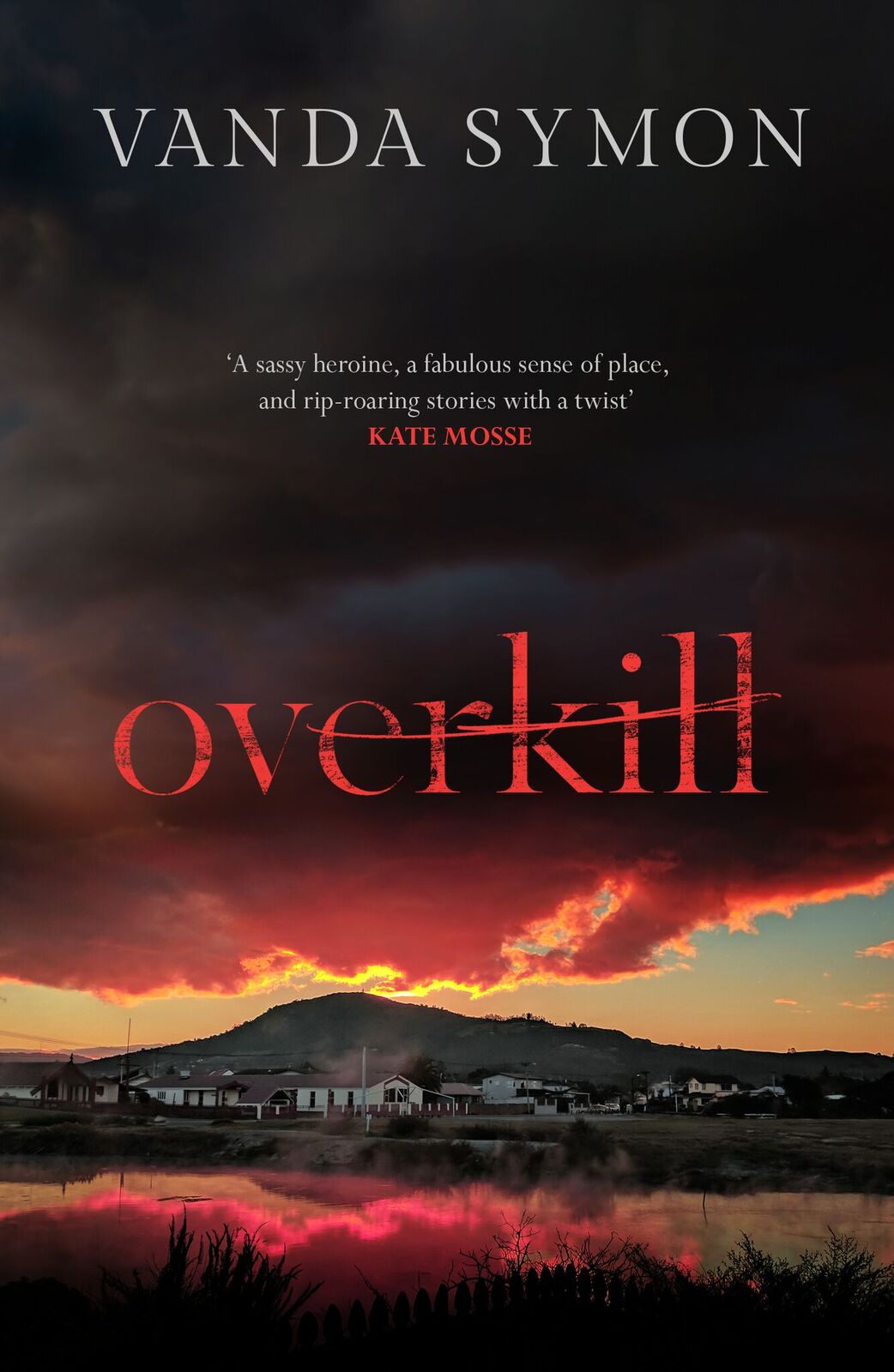
Blogtour review - Overkill by Vanda Symon

Overkill (PC Sam Shephard 1)
Vanda Symon
Orenda Books, 6 September 2018
PB, 272pp

I'm grateful to Orenda for a copy of the book to review as part of the blogtour and to Anne for the invitation to take part.

I loved Overkill. From its stunning - and violent - prologue, it grabbed me and carried me along. Very linear, very compelling, with a great protagonist, it is a book that demands to be read pretty much at a single sitting.

Sorry, not demands. Make that orders.

It is also a relatively short book and this is entirely feasible, so clear a few hours and go for it.

Sam Shephard ('Shep' to her mates in the New Zealand town of Mataura) is a rural policewoman in a one-company town focussed on meat packing. Her normal business is sorting out scuffles at closing time or trivial car accidents.

Not disappearances, suicides or murder.

Especially not disappearances, suicides or murders involving the wife of an ex - a woman she's had a few run-ins with herself (amusingly, Shephard is a little bit of an unreliable narrator and minimises these encounters, so she's gradually admitting to more and more of them as the story goes on).

So when Gabriella Knowes vanishes and is soon found dead, Sam has to tread particularly carefully. Her reputation is at stake, her feelings for husband Lockie are engaged and its a small town where everyone knows everyone else's business. There are no detectives based in Mataura so a load of out-of-towners come to take over the investigation.

Underneath it all though, there's a mystery to be solved and Sam sets about it with determination, even when warned off the case. ESPECIALLY when warned off the case. Friction, misunderstandings and resentment are guaranteed, but when they break out, they're truly volcanic.

I had great fun reading this book. Sam is a great protagonist - awkward, totally undetected, infuriating at times yet absolutely determined to get to the truth. She does herself no favours and it seems as though she sets out to annoy everyone (that is, every man because they all are) why tries to bring her back into line, silence her or get her out of the way. At times this can get pretty brutal, but Sam always, always stands up for herself and finds a way through. Or round. Despite their dubious history perhaps she's the best person, the best woman, to be in poor Gabby Knowes' corner.

Because it turns out that there are dark secrets behind Gabby's death...

STRONGLY recommended and I'm delighted that this is only the first in the series - I hope that Orenda will be bringing us more of these soon.

To buy the book you can visit your local bookshop (this may help) or try the big stores here or here.


16 September 2018

Blogtour review - The Lion Tamer Who Lost by Louise Beech

The Lion Tamer Who Lost
Louise Beech
Orenda Books, 20 September 2018
PB, 323pp

I'm grateful to Orenda for a copy of the book to review as part of the blogtour and to Anne for the invitation to take part.

I was so excited to have an opportunity to read another of Louise Beech's books, having loved The Mountain in my Shoe and Maria in the Moon. It takes something special to get me out of my normal SF-Crime-Fantasy-horror channel, but Beech's books always do it for me. She has a real knack for weaving stories around people - flawed protagonists who are working on their lives, getting stuff done and working through who they are and how they fit in - or don't - with those around them. The past is always relevant in building her protagonists and we need to see how their lives developed - there are things to be gone over, worked through, recalled - but these are optimistic books, forward looking books.

The Lion Tamer Who Lost is essentially Ben's story and Andrew's. Ben has fled England (I don't think the word is too strong) to volunteer at a lion sanctuary in Zimbabwe, and Beech interleaves her story - mainly sections, past and present, following Ben and Andrew, but there are one or two other points of view - with extracts from Andrew's children's book, The Lion Tamer Who Lost. These extracts both function as hints about what's going on in Beech's book and also tantalise because the book-in-the-book sounds amazing itself (I want to read it!)

Ben and Andrew were lovers, and clearly Ben is in Zimbabwe because of some kind of problem (a falling out?) but we only gradually learn the background. And that's good, because it allows us to luxuriate in Beech's prose, her insights into character and lives, and to get to know these very real, very flawed people - not only Ben and Andrew but Esther, with whom Ben becomes close at the sanctuary, Will, Ben's impossible dad, and others (including the lions Lucy and Chuma). Beech has a rare gift for sketching characters you can believe in and want to spend time with. In particular, of course, there are Ben and Andrew, and Beech shows us both their similarities (such as absent parents) and differences (Andrew is older and out, Ben dreads what his father and brother would make of his sexuality). There's a frequent point made about people being together or not expressed by their matching the rhythm of their walk - which sounds a bit cheesy but, when you read about it here, is actually quite shrewd.

Louise Beech
The book is engaging from the start, very much a love story, also a growing-up story for Ben, the lion sanctuary he's gone off to being also a kind of temporary sanctuary for him. Is there an element of Ben using it to escape his real life, exploiting the lions (and I suppose also Zimbabwe, while he's there he never interacts with the local people) to deflect from his troubles? Yes, of course there is, and the interest and drama here is very much his facing up to that, discovering responsibilities he can't run away from, and accepting those. I wouldn't want to be too harsh on Ben - once you learn what exactly happened you'll sympathise with the situation he is in - but he does become a much, much more admirable characters over the course of this book.

So, really, Beech has done it again - created an enthralling and believable cast of characters to accompany us on a journey with at its heart a solid vein of emotional truth. An excellent and wise book.

This review is part of the book's blogtour - please do follow the tour at the other sites hosting reviews, extracts and other treats. See the poster for details!

To buy the book - you know you want to! - you could visit your local bookshop (this may help) or try the big stores here or here.


15 September 2018

Review - Rosewater by Tade Thompson

Rosewater
Tade Thompson
Orbit, 20 September 2018
PB, 390pp

I'm grateful to Orbit for an advance copy of Rosewater.

Rosewater is a near future SF novel (set around 40 years from now) with the action taking place in Nigeria, partly in Lagos but mostly in the new city of Rosewater (named ironically, from its initial lack of sanitation). This is a near future where aliens have landed, though humanity struggled to understand them, or to disentangle the aliens themselves from their ships/ habitats. Rosewater grew up surrounding an alien "biodome" (hence, it is doughnut shaped, making travel awkward) for reasons that Thompson only slowly reveals.

Thompson has created a genuinely new and disturbing concept of "alienness" in this book, which he has fun sharing only gradually and which really challenges the classic "little green beings in spaceships" concept. As this nature is closely bound with what is really going on, it needs to be kept under wraps until very late in the book. A great deal of the early story is driven by a more thriller-y style plot, focussed on Kaaro, one of a special paramilitary team called "Section 45") of Government agents recruited because the presence of the alien has endowed them with superhuman abilities.

There is plenty of mystery in that, together with Kaaro's special gifts, to keep the story humming along. Kaaro is able to read others' thoughts via the "xenosphere", a kind of field generated by the alien presence, and as part of S45, this ability is employed interrogating suspects or defending against hackers using the xenosphere to attack banks or collect sensitive information. Before joining S45, Kaaro used his talent for more dubious ends so he's very much poacher turned gamekeeper.

Dotting backwards and forwards between the present day (2066) and several earlier timelines, the book shows how the current situation - the alien Biodome dominating Rosewater, providing free power, granting annual healings to those in the vicinity, but also, awkwardly, reanimating the dead - - arose, but also Kaaro's personal journey to S45, what he has done and what he has suffered - and who he has betrayed.  We see Kaaro's current caseload, his reservations about his job, and the messy internal politics of S45. And a threat to the unit...

We also see Kaaro's developing relationship with the mysterious Aminat, perhaps with some concern (he's not the most reliable of chaps...) and  a particular, special connection to the Dome (implying Kaaro also knows more than he's letting on).

It took me a little while to get used to the switching between timelines, as there is a lot of action going on everywhen. Inevitably at any given time a couple of the threads are left hanging, often on a cliffhanger. This is very much a book to be read through without distractions or delays as it does, piece by piece, build to a kind of holographic unity where the parallel strands reinforce one another. Superbly paced, they do come together and this is a compulsive story, always driving forward, written with a very distinctive narrative voice and with a great sense of place.

In particular, Thompson is able to draw analogies between Nigeria's past, colonised by Britain, and the situation it potentially faces now with regard to the nameless aliens. Indeed, Kaaro notes in a couple of places that this gives an advantage compared with, for example, the US, whose response to the incursion seems to have been to go dark completely, or Britain itself (don't ask).

Kaaro himself is an engaging protagonist, well rounded and sympathetic to a degree although you really shouldn't trust him. The supporting characters are also well portrayed, especially his boss Femi (who I wanted to hear much more about) although I found his attitude to her a bit crass at times. (That's Kaaro...)

The story leaves a number of key threads unresolved (the power struggle in S45 itself, the eventual outcome of the encounter with the aliens, the fate of Aminat's brother who is an intriguing wildcard in this story, and indeed, what becomes of the relationship between Kaaro and Amina) - enough of these to encourage me to hope for more from this world, but even if that doesn't happen it's still left a vivid impression of two distinct cultures working in each other to ends that, perhaps, both sides are unable to foresee (even the super advanced aliens).

Strongly recommended.

For more about Rosewater see the Orbit website here.

13 September 2018

Review - Country by Michael Hughes

Country
Michael Hughes
John Murray, 26 July 2018
PB, 314pp; e-book; audiobook

I bought my copy of Country as an audiobook.

I've started listening to audiobooks in the car on my commute to the station, and I think Country was an excellent choice to begin this. Not only is the subject matter - a reimagining of the Illiad set in the corner country Ireland towards the end of the Troubles - fittingly oral, but in this version, read by the author, the story becomes luminous, immersive, beautiful - even when dealing with very ugly events.

Hughes has a rhythm, an air, that engages. Listening to him is like sitting by a camp fire, or in a courtyard or marketplace or a chief's fort long ago, hearing the beginning of story, before it would ever have been written down. "Listen" he says or "Now we're getting to it" or "Wait till you hear". Or the story veers off into a tale of the old days, of heroes and cruelties, or the life of some curious person tangential to the main narrative. While I'm sure this book reads well on the page, I think it's made to to be heard.

The episodic nature helps with that: I've found before with audiobooks that there's a risk of losing concentration, missing something vital, and leaving the story half done. Not here. The effect is almost holographic, building up the lives of the IRA squad, its enemies in the British base and the people of the "downland" - including spies, political bosses ("our friend, Mr Paul Bright"), the shady "higher ups" who are often invoked but never appear in person and victims.

The conflict in Ireland was seen - is seen - here in Britain as very polarised and indeed that is reflected here, with awful things done by one side to the other. But the book also reflects another story - a closeness, an interdependence, blind eyes turned by one faction to the goings-on of the other, Republicans passing intel back to the Brits to settle scores, tacit deals to spare those "higher-ups" from violence. These are small communities where everyone knows everyone else, whichever side they're on. Hughes draws a fascinating picture of this society, and layers it with references and analogies to the story of Troy, or the oldest tales of Ireland - other societies where warfare was, at one level, "heroic" - and we get the preposterous warrior boasts, the single combat, the looting of the dead, gifts of treasures, women and, above all perhaps, the drinking and feasting (the latter conveyed through fry-ups joyfully described and eaten in volume).

I'm at a disadvantage here because I have never read The Illiad (don't @ me) but even I can see some of the comparisons - those "higher-ups", the names, the centrality of a vanished wife to the story. They give it a point and a focus and demand attention. Is Hughes really saying that nothing has changed in attitudes in three thousand years? All the blood shed from the 1960s to the 1990s might suggest that. Is this a good way to understand the "men of violence" we were nightly warned of on TV? Their cause, rehearsed here, is familiar yet in this story it's overshadowed by the score-settling of the older Troy story. Is that fair?

I wasn't, in the end, sure whether the comparisons with Troy - beyond the similarities in outlook I've mentioned above - helped. Certainly, towards the end, there were parts of the story where what one might see as the need to stay close to the source, such as two combatants running three times around the walls, or close quarters fighting rather than the use of firearms over greater distances, seemed to constrain the story rather. But in many other places Hughes happily throws overboard Homer's narrative (even I can see that) so I think this is still him telling the story he wants to tell, not just following his source.

And if at times that makes the doings of these hard men, these soldiers, these heroes, look faintly ridiculous - well, think about that. Perhaps they were, both in the 20th century AD and the 10th BC.

One thing Hughes does do here is to give some voice to the women. Yes, many of the characters - the volunteers in the squad, the SAS, the police and the "Green Army" are men but women play some key roles and most of all, the Helen-figure, Nellie, plays an independent role, taking her own destiny in her hands, manipulating those who would use her and making the best she can of her circumstances. She speaks, here, and what she says matters.

All in all this is a startling, vivid and compelling story, very different from anything I'd read recently. I'd strongly recommend.

For more about Country, see the publisher's website here.


5 September 2018

Review - An American Story by Christopher Priest

Cover by Kushan Rajani
An American Story
Christopher Priest
Gollancz, 6 September 2018
HB, 308pp

I'm grateful to Gollancz for an advance copy of this book.

An American Story is an extraordinary book, although it's hard to pin down why in a review, or indeed to pin it down at all. I think that's the point.

Part thriller, part love story, part examination of loss and grief, part history, this book revolves around the 11 September 2001 terrorist attacks on the USA. It's not science fiction or fantasy - I wondered if Priest would use that to get at the reality (or realities?) behind 9/11 but I don't think he does. (There is one tantalising moment when a character seems to remember something that she shouldn't know, and I wondered if that might suggest, I don't know, deeper workings going on here but, characteristically, this moment is given to a character whose memory is damaged and I take it more as a hint of collective uncertainty, of the reshaping of history and truth, than as a fantastical plot development.

At one level, this story is a simple quest for the truth. Journalist Ben Matson lost his lover Lil in the attacks - lost in the truest sense of the word, as her body was never found, her very movements, even the reasons for those movements obscured among the events of that day. Thesis foreshadowed in an early scene where she and Ben argue over airline flights and meeting points. It's a little bit shifty, one thinks, what is going on here? Whatever the facts, it is a loss Ben lives with, which becomes almost  more concrete fact than its cause. Again, this backward chaining of effects to causes is a central theme of the book.

Despite his grieving, Ben does eventually find a new partner, Jeanne, with whom he has a son and the present of the book in centred on their lives, looking back at 9/11 and its aftermath, so that the book is  set between 2001 and a point several years in our future, when Ben is reminded of what happened to Lil by a new discovery. That's where the thriller elements kick in with Watergate-toned "Deep Throat" moments, encounters with the shadier branches of the US Government, covert meetings and a general atmosphere of threat.

But it isn't really a thriller. In particular we don't get a neat ending or conclusion. Ben has become convinced that something is wrong with the official narrative about 9/11, but he's not trying to nail the guilty or discover the truth except in one very personal sense: he wants to know what really happened to Lil. So don't expect Mission: Impossible style theatrics - this is as much Ben's quest into himself as it is an interrogation of the outside world.

Indeed, from a certain perspective not a lot actually happens, at least in the "present", at least until the very end of the book, with much of the story recounting how things got there. In keeping with that, Priest's writing is restrained, domestic, recording Ben's and Jeanne's lives, the challenges posed when her mother Lucinda becomes infirm and must stay at their house on the island of Bute and their delicate, compromise-filled days (which include negotiating the tricky question of Lil and of Ben's continuing interest in her death). These parts are never dry, filled with insight about how two people organise their lives, their feelings, around each other. Not everything needs to be said, and Priest almost lovingly creates a world around the two.

Yet into even the most domestic moments come noirish moments, consequences, incursions of the wrong. "We were all in the dark, in the shadow of 9/11, victims, or remnants of victims, losers of our lovers, relatives, inadvertent characters in the story that insidiously weaved through and around our lives, untrue, unreliable, irrational and, as yet unfinished"

The book becomes most thriller-like when Ben has to visit London for work and we see the state to which England has fallen post Brexit. It's not nice - Scotland is now independent, London has become a security-ridden hellhole best by CCTV,  armed guards and immigration police. Or when he makes trips to the US. Here, jangling details stoke the tension - details of hotel rooms, flights, ordinary things like a car running low on charge or the junk dumped behind a hotel.

Through all this, we keep circling back to 9/11, to Ben's initial doubts and his subsequent investigation. Priest lays out some of the awkward evidence and theories about planes that weren't there, demolition charges, missing bodies, missing flight data recorders and so forth. This is all very well researched and preoccupies Ben to a point where Jeanne becomes worried about him. Ben's conviction that something is off is bolstered by meetings with shadowy insiders and possibly even with guilty parties. There is, for example, the mathematician Kyril Tatarov whose ideas about the manipulation of truth via media seem to foreshadow the "fake news" familiar today. Tatarov is an enigmatic figure, obsessed with a "Thomas theorem" (which is a real thing) that (if I have understood it correctly) reasons backward from effect to cause.  As I have said, i think that's a central concern of this book, with world events since 2001 seen as the consequence, and the events of 9/11, whatever they were - if, the books seems to say, it's even possible to say what they were - the cause.

The book doesn't come to neat and tidy conclusions. As I have said, it's ultimately not a thriller. There is no revelation of what "really happened", much of the speculation is mutually inconsistent while partial truths are uncovered they don't add up to a complete, alternative narrative. Instead we are left, as is Ben, to worry about the future and about where it will all lead. That is, I think, actually the only tolerable conclusion to this story. There is room for doubt, perhaps, about the events of 9/11, about the official story, but what there isn't room for is the certainty of an alternative account which purports to be "the truth".

Bringing the story to a successful conclusion despite the degree of doubt shows Priest working at his very best. It would have been so easy to let the book sag into despairing cynicism or to set set up some other false certainty by validating conspiracy theories outright but he avoids this, keeping the story mostly personal, looking at the consequences of real actions on his fictional characters. The book ends on a questioning note, though an oddly helpful one.

I will end my review with a quote from Prof Tatarov himself. Speaking of the young men and women busily obscuring history, he says - and it sums up, I think, the central accusation of this book:

"They believe in interpretations, not reporting. They praise opinions, but they despise facts . They talk of actions, whereas they are merely noticing the consequences of other people's actions."


30 August 2018

Review - Bloody Rose by Nicholas Eames

Illustration by Richard Anderson,
design by Lisa Marie Pompilio
Bloody Rose (The Band, 2)
Nicholas Eames
Orbit, 29 August 2018
PB, 510pp

I'm grateful to Nazia at Orbit for an advance copy of Bloody Rose.

I can still remember the first time I played Dungeons & Dragons (AD&D, 3rd edition). There were only two of us - me with half a dozen player characters and my friend, who was DM. The party makes its way down a set of stone steps into a room with a pile of straw in the middle. Several giant beetles are wandering around the straw. What do we do? I wondered. They seem like harmless creatures, and they aren't evil... a prompt from my DM friend: You attack them of course!

And therein lies the contradiction - and the wonderful moral heart - of Bloody Rose.  The book is set in a world of mercenaries, wilderness, and monsters. Picking up from its predecessor, Kings of The Wyld, it features a society where the superstars are "bands", groups of mercenaries who go form city to city fighting "monsters" for glory (and gold). Deliberately, this setup is drawn as similar to that of touring rockstars in the 80s. The bad behaviour. The drink and drugs. The sex. The bands have extravagant names and larger than life members, and they tour in "argosies", enormous wagons fitted out with every modern convenience. Eames has a great deal of fun making these comparisons and including real names and echoes of actual rock heroes, at least in the supporting cast (for example, the purple veiled Prince of Ut; and look at the some of the namecheck in the final battle). I don't think Fable, the band on home the story focuses, is based on anyone specific although the components are all there - from the dodgy manager to the sexy dealers who hang around to the smashing of instruments.

But also, of course, there is slaughter and death on the tour. In Kings of the Wyld we saw less of this -  Saga where an older band who'd got together and who'd grown up fighting for their lives in the wilds. They saw the killing of captive monsters in stadiums as pretty abhorrent and the story didn't focus too hard on it, soon breaking out to more traditional fantasy terrain with a terrifying, monstrous Horde in the field.

In Bloody Rose, Eames spends much more time on this morally dubious issue - basically the same as I had with those AD&D dung beetles all those years ago - and also explores the consequences. Who are the monsters really? What happens when you try on a different nature and find yourself changing to fit? This is a point he comes at again and again from different directions - from the shapeshifter Brun to Tam, who wants to be a bard, to Rose herself.

Rose - Bloody Rose. The most kick-ass hero I've come across in a long, long time. The driving force behind Fable, Rose featured in Kings too though that book was more about the quest of her father and his old bandmates to rescue her. Here she's centre stage, and we see the consequences of that "rescue" - both for her and for the wider world of Grandual. Very much taking aim at the "woman as motivation for the quest" trope in fantasy, Eames makes sure we see Rose as a thoroughly active character in her own right, viewing her through the eyes  newbie teenager Tam Hashford who, against her father's wishes, joins away to join the mercs, her head fall of glory and fame.

The book is very much an account of Tam's growth and maturing shows how her childhood dreams fall away. Setting out to follow her Wyld Heart, she joins Rose's band and is plunged into a terrifying series of areas fights, battles, quests - as well as the emotional pressure cooker of touring. Together Tam and Rose are the two pillars which support this story, though there is a wide cast of additional characters including some from Kings (I can reveal without being too spoilery that Arcandius Moog makes an appearance too).

The book has violence, comedy, warfare, comradeship, violence, heroism, loss, violence and, at its heart, a real, beating moral heart. We don't just see amorphous evil (though there is some of that), the antagonists here have real motives, whether revenge, survival or simple fear. ("You didn't get to be the villain of one story unless you were the hero of another.") It also doesn't spare us the aftereffects of combat, and there are plenty of alternative viewpoints to the death-or-glory swagger of the mercs (which is itself, we soon release, often an assumed pose). Eames' world is also determinedly, transparently diverse (Tam is gay; Rose leads her band of mercy; in the old stories that are cited "at the conclusion... the knight and her dragon would fly off together into the sunset).

Eames' writing also crackles. ("Some people know how to kill a conversation. Cora, on the other hand, could make it wish it had never been born") ("...another broken thing with an aching song to sing"). It's the kind of book whose pages simply fly by until, like those teenage D&D sessions, you look up and it's well past midnight and you're in a torchlit cave surrounded by orcs and you don't want to leave...

In short - while Kings of the Wyld was a terrific book, Bloody Rose is even better. It is simply a masterpiece - exciting, complex, true, sad (in a couple of places, very, VERY sad) - both a deeply traditional fantasy and at the same time, something that knocks all those dusty tropes over and gives them a good kicking (with steel toed boots).

You know what to do next!


28 August 2018

Blogtour review - Morte Point by Robert Parker

Morte Point (Ben Bracken, 2)
Robert Parker
Endeavour Quill, 23 July 2018
PB, e 265pp

I'm grateful to for an advance copy of Morte Point for review and for being part of the blog tour. (I'm especially grateful to Robert for his kind message in my copy).

Morte Point is a thriller, with near relentless action. This is not a genre I read frequently, so I won't try to compare it to others or to analyse how it measures up to them. I will say that, for this reader, it was a compulsive, absorbing and - yes, I know this is often sneered at - page-turnery read. Parker sticks, I think, to the bare bones: a man on the run, a woman, a deadly secret, treachery in high places and a great deal of violence.

If you're going to say "but that isn't very plausible" well nor is a crime story featuring a cerebral detective and sidekick solving the murder by insight rather than by crunching data, and yet here we are.  A sonnet isn't a very natural way to speak, either, yet the discipline of following a structure inspires creativity. The template followed here isn't so far from, say, The Thirty Nine Steps, with a returnee man of action (Ben Bracken, from Parker's A Wanted Man) arriving in Britain only to be confronted by murder and intrigue, taking off pursued by the bad guys, and having both to work out what's going on and to stay alive. The point is how this is then made compelling to read.

Much of the compulsion of Morte Point comes, for example, from the little decisions that Bracken makes, the steps he takes to hide the pursuit, stay ahead and - bluntly - not die. I'm no expert but Parker makes, for me, a credible account of how that might just work - perhaps with a bit of licence here and there. What are the essentials a man on the run needs, and where does he find them? Which way should be run? What are the risks that need to be taken, and which are the ones to avoid? This is all interesting because we can easily imagine being in Bracken's position, even we can't quite grasp the details of the wider conspiracy he's tangled up with.

Parker also plays with our sympathies a bit: Bracken is introduced as a bit of a vigilante but in a way that makes one warm to him, but Parker then has him do things that rather alienate the reader, even if they follow from the logic of the story and even if what he's up against is bigger and much nastier. That creates a bit of a moral dilemma (well, what would you do?) which gives the story some bite.

Bracken's interior point of view - most of the story - is interesting. Parker makes him a shrewd observer, but not a smooth person: his voice comes over as a bit self-absorbed, even a teeny bit pompous - not a natural team member, which injects tension at times when he's forced to work with others. As you might expect, it's the sections of the story where Bracken is on his own, making his way, that are most compulsive, as though dealing with others takes his energy down a level. Again I think that reminds me of Richard Hannay in The Thirty Nine Steps - Buchan's book, not Hitchcock's film, although in plot terms the denouement here is perhaps closer in atmosphere to the film than the original book, in that it brings things to a real climax.

That climax sets us up for Bracken's next adventure, I hope, in a sudden turn that I really hadn't seen coming, leaving things pretty much hanging. It'll be interesting to see what Parker does next!


You can buy Morte Point from Amazon here.

For more information from Robert Parker, see his website https://robertparkerauthor.com/, follow him on Twitter at www.twitter.com/robparkerauthor or on Facebook, https://www.facebook.com/robertparkerauthor. Endeavour Quill is at www.endeavourmedia.co.uk and on Twitter and Facebook at www.twitter.com/EndeavourQuill and www.facebook.com/EndeavourMedia1 respectively.